Why Women Struggle to Receive Love, Rest, Pleasure, and Support
Many women have spent so much of their lives learning how to be useful that they no longer know how to simply exist without earning their place in the room.
Not consciously, of course. Most women would never say this out loud. In fact, many women would probably insist they are fine at receiving. They love deep love. They want support. They crave rest. They fantasise about somebody taking care of them for once. They dream of softness constantly.
And yet the moment it arrives, something inside the body tightens…

Artwork by Katja Perez.
The Lost Art of Receiving: Feminine Receptivity in a Culture That Rewards Overgiving
Many women have spent so much of their lives learning how to be useful that they no longer know how to simply exist without earning their place in the room.
Not consciously, of course. Most women would never say this out loud. In fact, many women would probably insist they are fine at receiving. They love deep love. They want support. They crave rest. They fantasise about somebody taking care of them for once. They dream of softness constantly.
And yet the moment it arrives, something inside the body tightens…
A compliment lands and is instantly deflected. A partner offers help, and suddenly it feels easier to just do it yourself. A day off appears, and it somehow becomes a day for catching up on life admin. Even pleasure can become strangely difficult to tolerate. A woman can spend years longing to feel more desired, more nourished, more touched, more emotionally met, only to discover that when she finally is met, there is a part of her that wants to squirm away from the experience almost immediately.
This isn’t because women are inherently bad at receptivity, quite the contrary, in fact. Over my many years in private practice, I see how many women have simply been conditioned into chronic output for so long that receiving starts to feel psychologically and physiologically unfamiliar.

Women are often socialised less as human beings and more as human givers.
Useful daughters. Useful wives. Useful mothers. Useful employees. Useful emotional support systems for everybody within a fifteen-kilometre radius.
Emily Nagoski speaks beautifully about the way women are conditioned into responsiveness and emotional labour, and I think you can feel the effects of that conditioning everywhere once you begin looking for it. Women are expected to anticipate needs before they are spoken. To manage atmospheres, smooth tension, and absorb discomfort. To remember birthdays and buy thoughtful gifts, and notice when somebody’s tone changes slightly halfway through a conversation.
Many women become astonishingly skilled at caring for others while remaining almost entirely disconnected from their own internal experience.
And because this dynamic is so normalised, it often goes unnoticed until the body begins protesting somehow.
Why So Many Women Feel Exhausted, Numb, and Unable to Relax
Burnout is often discussed as though it is simply a scheduling problem.
Too much work. Too little rest. Poor boundaries. Too many obligations. And sometimes that is true.
But I think many women are exhausted by something much deeper than logistics. They are exhausted by the system conditioning of relentless internal orientation toward everybody else.
The constant monitoring, subtle shape-shifting, emotional management, anticipation, and hypervigilance.
Many women are moving through life with nervous systems that are permanently leaning forward.
Even in rest, they are preparing.
Even in intimacy, they are observing.
Even in pleasure, they are monitoring how they are perceived.

I think this is why so many women experience the strange combination of being deeply loved and deeply starved at the same time. They may technically receive support, affection, praise, or care, while never fully allowing themselves to soften enough for those things to truly land.
Because true receptivity requires safety.
And many women do not actually feel safe relaxing their hypervigilance.
The Relationship Between Feminine Energy and Receptivity
What fascinates me most is that women are, biologically speaking, the receptive sex.
And yet culturally, we are conditioned into relentless output.
There is something almost tragic in that contradiction.
Women are taught to penetrate life constantly. To push harder. Optimise more. Stay productive. Stay desirable. Stay emotionally available. Stay accommodating. Stay ahead of everybody’s needs. Stay “low maintenance.” Stay pleasant. Stay grateful.
Meanwhile, the body itself often longs for the exact opposite.
Slowness.
Spaciousness.
Presence.
Softness.
Devotion.
Sensation.
To be touched without immediately needing to perform something in return.
And I think this informs feminine energy deeply.
Not in the flattened internet sense of “divine feminine” aesthetics and curated softness. I mean something far more embodied than that. A capacity for openness. For attunement. Allowing yourself to be moved by life rather than constantly managing and controlling every experience before it reaches you.
Receptivity is not passivity.
It is presence.
It is the ability to let something enter you emotionally, psychologically, relationally, sensually, and spiritually.

To let care touch you.
To let beauty affect you.
To let pleasure actually register in the body instead of skimming across the surface while your nervous system remains braced.
Hyper-Independence Is Often a Trauma Response Wearing a Power Outfit
I see this especially in women who strongly identify with competence and hyper-independence. Something I used to absolutely PRIDE myself in. Women who can organise the trip, solve the crisis, regulate the room, build the business, care for the children, hold everybody together emotionally, and still somehow apologise for being “a bit tired lately.”
There is often a profound grief underneath this kind of over-functioning.
Not because capability itself is bad, but because many women learned very early that being needed felt safer than having needs.
That being useful secured belonging.
That softness was risky.
That receiving too much might make them selfish, lazy, dramatic, excessive, demanding, or difficult.
So instead, many women become very good at giving in ways that are socially rewarded while quietly starving in the exact areas they most long to be nourished.
And the strangest part is that this disconnection from receptivity often becomes most obvious in the places women crave it most deeply.
Love, for example.
So many women long to feel cherished, adored, emotionally held, deeply met. They want devotion. Intimacy. Attunement. They want somebody to notice them carefully for once.
And yet when that level of care actually arrives, it can feel almost unbearably vulnerable.
Because to truly receive love requires allowing yourself to be impacted by it.
Why Receiving Can Feel So Emotionally Exposing
Receiving sounds soft and beautiful in theory, but in reality, it can feel excruciatingly vulnerable.
Because when you stop performing competence for a moment, there is often a very tender human being underneath. One who is tired. One who wants support. One who wants to stop carrying everything alone.

And many women have spent years building identities around being the strong one.
The reliable one.
The capable one.
The emotionally intelligent one.
The endlessly giving one.
I know I did.
But to receive deeply often means loosening your grip on those identities, even briefly.
It means risking disappointment.
Risking dependence.
Risking grief.
Risking the possibility that your needs may actually matter.
And for many women, that feels far more dangerous than simply continuing to over-function.
The Lost Art of Receiving
I think many women are profoundly starved for receptivity.
Not because they are incapable of love, but because they have spent so much of their lives learning how to earn belonging through giving.
And yet there is something deeply healing about finally allowing yourself to soften a little.
To be cared for.
To rest before complete burnout.
To let somebody else carry something for a moment.
To stop immediately reciprocating every act of kindness.
To let pleasure linger in the body instead of rushing past it.
To stop treating your humanity like an inconvenience that must constantly justify itself.
Not forever. Not helplessly. And not passively.
Just enough to remember that you are allowed to exist as a human being, not only as a source of labour, beauty, emotional regulation, productivity, care, or service for others.
Receptivity is not weakness.
Sometimes it is the beginning of finally coming home to yourself.
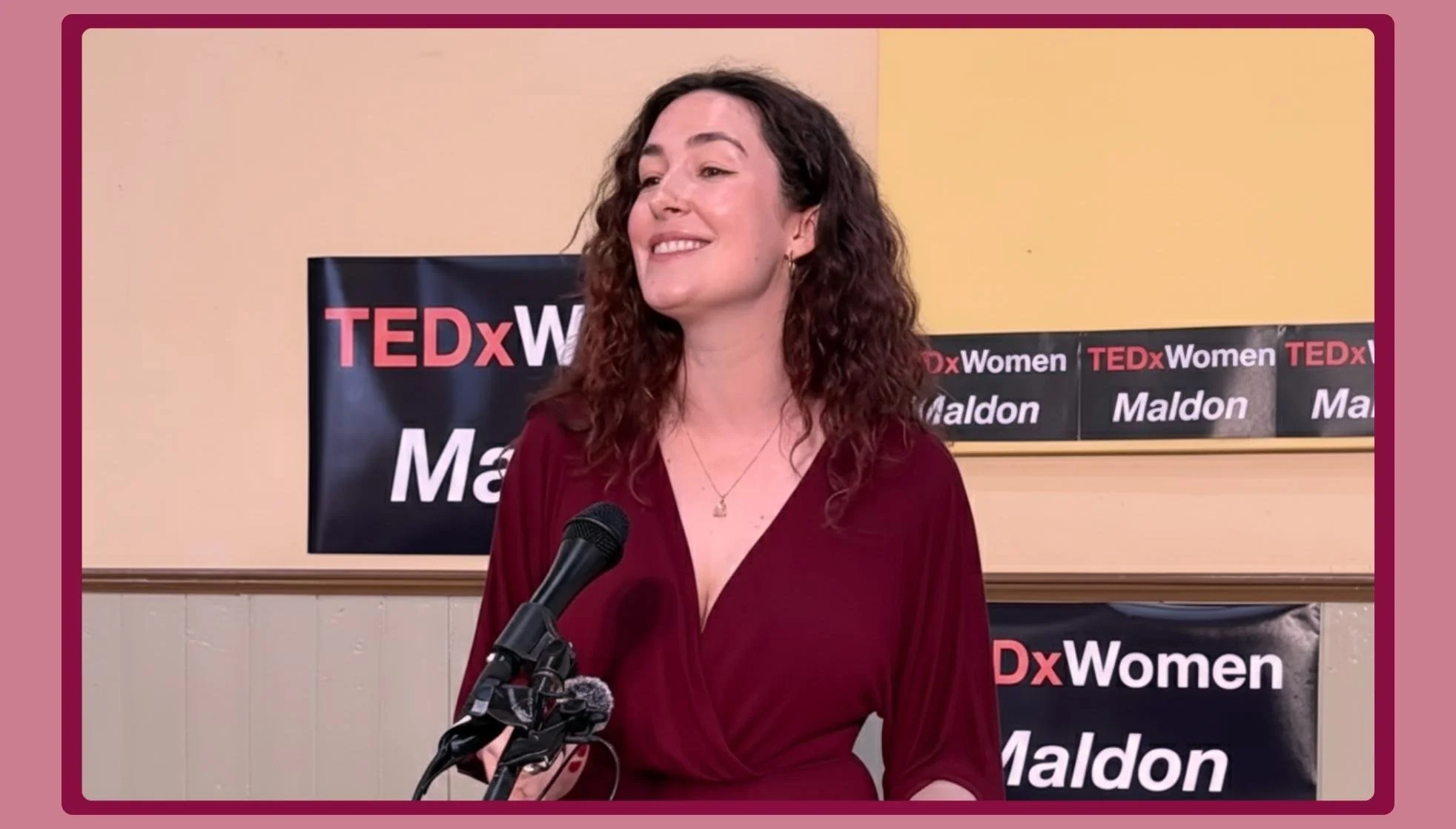
I am so passionate about this topic, I actually delivered a Tedx talk on it! Check it out here.
Explore The Pathways To Receiving
If this work resonates with you, if you’re beginning to recognise how deeply you’ve been conditioned into overgiving, over-functioning, and abandoning yourself in the process, you do not need to navigate that return alone.
Whether you’re longing for deeper embodiment, healthier relationships, more emotional intimacy, nervous system healing, softer self-trust, or a more connected relationship with pleasure and receptivity, there are multiple pathways available to support you.
Explore the pathways to work together and discover where your next step may begin.